Flying Warrior: City Legends
- 4.5
- Rating
- 1.00M
- Installs
- Free
- Price
 Analysis by App-foxy
Flying Warrior: City Legends caught my attention because it focuses on one clear fantasy: moving through a city from the air while taking on crime. That flying ability is the heart of the experience, not just a visual extra. In my time with this action game, the most enjoyable moments came from deciding how to approach a street, when to dive into a fight, and when to use the open space above the buildings to reset the situation.
Developed by Galaxy Legend Game Studio, the game is free to play and aimed at Everyone. It runs on Android devices using version 7.0 or newer, which makes it accessible to a wide range of phones and tablets. The current version is 1.0.4, and the game has already passed one million installs. Its average rating sits at 4.6 from 385 ratings, so there is clear early interest, although I would still treat that score as a useful signal rather than a complete picture of long-term depth.
Why flying changes the action
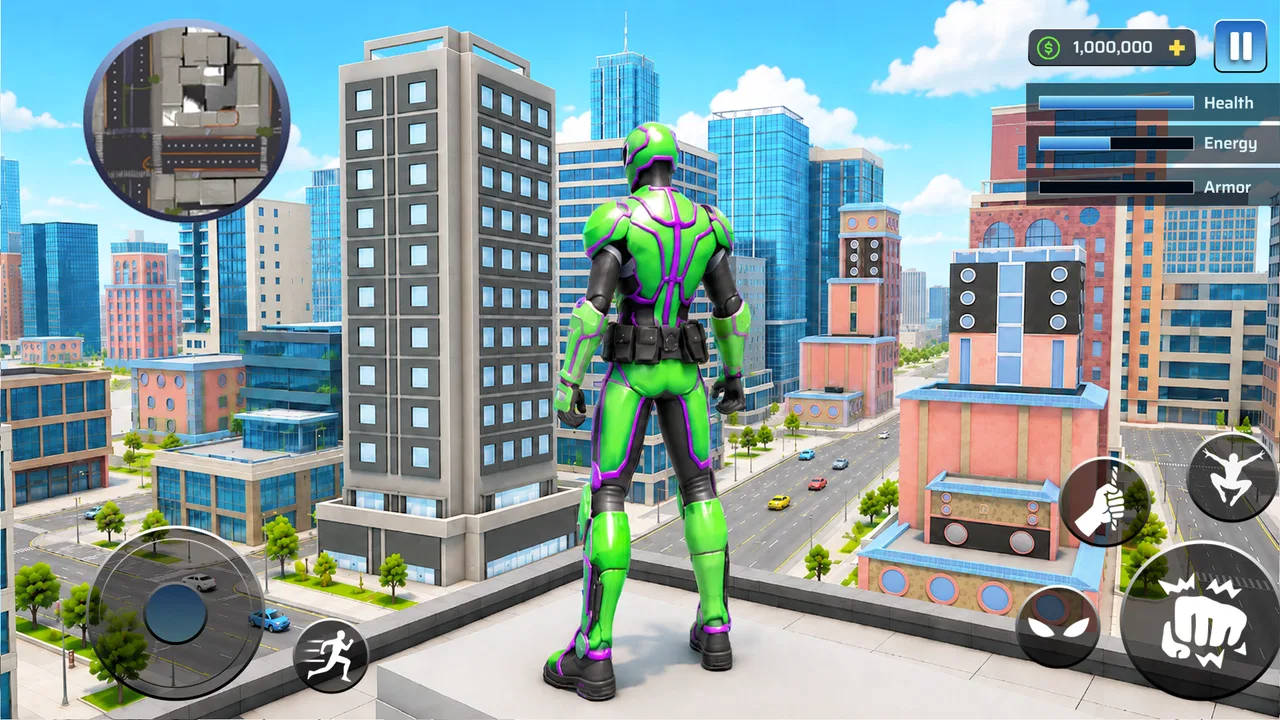
Most city-based action games keep me close to the ground. I move along roads, enter alleys, and use buildings as barriers. Flying Warrior: City Legends changes that rhythm by giving movement a vertical dimension. I can look at a confrontation from above, cross the city without following the road, and choose a more direct line toward trouble.
You May Also Like

 Blood Strike: 2.5 Anniversary
Blood Strike’s Loadouts Turn Every Drop Into a Tactical Gamble
A close look at Blood Strike’s custom loadouts: how fast access to signature weapons reshapes its battle royale rhythm, rewards preparation, and narrows the gap between fights.

 Pandora - Music & Podcasts
Pandora’s Music Is Easy to Start, but Harder to Recover
Pandora’s strength is its low-effort path from a seed to a station. Its weak spot is how much confidence it asks you to place in connection, setup, and quiet recovery.

 8 Ball Pool
 Is Built on Rivalries, Rematches, and Routine
A close look at the rivalries, rematches, shared routines, and unanswered safety questions that turn a quick pool match into a persistent mobile community.

 Samsung Music
’s Quiet Strength Is Playing What You Already Own
Its reach comes less from spectacle than from dependable access to a personal library. That simplicity is both the app’s strongest retention engine and its ceiling.

 AccuWeather: Weather Radar
AccuWeather Review: A Quick, Clear Forecast for Everyday Decisions
For everyday plans, the best forecast is the one you can understand quickly. AccuWeather makes rain timing, radar, and local conditions easy to act on, with a few trade-offs.

 Hill Climb Racing
Why Hill Climb Racing Still Turns Crashes Into One More Run
A tiny car, a bumpy hill and one more upgrade: Hill Climb Racing keeps resurfacing because its simple chaos makes every near-miss feel personal.
More From Our News Desk



That freedom makes ordinary movement feel like part of the gameplay. I am not simply walking between fights. I am constantly thinking about height, distance, and approach. A target on one side of a block can be reached from the air instead of through a long route at street level. When several threats are spread out, the ability to move overhead helps me decide which one to handle first.
The strongest feature is the way flight turns positioning into a decision. It gives the game a different feel from a standard brawler because the city becomes a space to navigate in three dimensions. The effect is especially noticeable during short sessions, when I want something more active than a simple tap-through combat loop.
The flying concept also supports the superhero tone without requiring a complicated explanation. I feel like a character with a clear role: reach the danger quickly, fight criminals, and improve the available arsenal. The store summary mentions unlocking weapons, and that progression idea gives the action a reason to continue beyond the first few encounters.
Flight is useful, but it is not automatic fun
Air movement only works when it gives the player meaningful control. In this game, the appeal comes from combining travel and combat rather than treating flight as a decorative animation. I pay attention to where I am going, line up an approach, and then commit to an attack. That small planning step is what separates the game from a basic character running through a fixed urban level.
At the same time, players who prefer carefully structured combat arenas may find the open movement less satisfying. Flying creates freedom, but freedom can also make an encounter feel less focused if the player is looking for tightly choreographed stages or precise competitive balance. I see this as a casual action experience first, not as a replacement for a deep fighting game.
How the city action feels in practice
When I start playing, I approach it as a quick pick-up-and-play game. The premise is easy to understand: take to the sky, find trouble, and use the available weapons to deal with it. That clarity matters on a phone, where I may only have a few minutes and do not want to study a long tutorial before reaching the main activity.
The best way to use the flight system is to avoid treating it as a button that should stay active all the time. I get more from it when I use the air as a staging area. I can rise above the immediate action, check the direction of the next threat, and then descend with a purpose. This makes the movement feel tactical without turning the game into a slow strategy title.
One practical tip is to begin each encounter by creating a little distance rather than rushing directly into the center. From there, I can judge whether the situation is better handled with a direct attack or a wider approach. This is a small habit, but it reduces the feeling of being surrounded and makes the flying mechanic easier to control.
Another useful approach is to think of weapons as tools for changing the pace of an encounter. Unlocking a new weapon should not only be viewed as a power increase. It can also change how confidently I enter a crowded area. A weapon that lets me act from a safer position may be more valuable in practice than one that looks stronger but encourages reckless close-range play.
The game is at its most approachable when I keep the sessions focused. I can play while waiting for an appointment, during a short break, or when I want a simple action game without committing to a long campaign. The superhero setting makes those brief sessions immediately understandable, and the flying movement gives them more personality than a conventional street-fighting loop.
A realistic everyday session
Imagine having ten minutes before leaving home. I would open the game, take a few moments to get oriented, and then use the city as a fast route into action. Instead of trying to complete a long, uninterrupted play session, I would focus on one practical goal: reach an active area, test a weapon or movement approach, and finish after a satisfying encounter.
That style suits the game well because its central idea does not need much preparation. I do not need to remember a complicated story before enjoying the next flight. I can return after a day away and immediately understand what I am supposed to do. For a mobile action title, that low entry barrier is a genuine strength.
The trade-off is that players looking for a large narrative or a highly layered progression system may want more structure than this format provides. The flying premise gets me into the game quickly, but it also sets an expectation that the main pleasure comes from movement and action rather than from a detailed role-playing framework.
Weapons, progression, and the cost of simplicity
Unlockable weapons give the game a reason to keep playing. I like progression systems more when they support experimentation, and the idea works best here when each new option encourages a different way of approaching the city. Even without making the weapons the entire focus, their presence helps prevent every encounter from feeling exactly the same.
My advice is to avoid chasing upgrades only because they are new. First, notice which parts of combat cause the most trouble. If I struggle when several enemies close in, I should favor an option that helps me create space or end a confrontation quickly. If movement is already comfortable, a weapon that complements aerial positioning may be more useful than one that simply repeats the same attack pattern.
This is also where the game differs from endless runners and ordinary beat-'em-ups. An endless runner gives me constant forward motion but usually limits my role to avoiding obstacles and collecting items. A traditional beat-'em-up gives me more direct contact with enemies but usually keeps movement on one plane. Flying Warrior: City Legends sits between those ideas, using city travel and combat as one connected activity.
Compared with a large open-world superhero game, however, this is a much lighter proposition. I would not choose it if I wanted a cinematic story, a huge set of side activities, or a detailed simulation of a city. Its appeal is narrower and clearer: the satisfaction of being a flying fighter and using that mobility to reach action quickly.
That narrow focus can be a benefit on mobile. A game that tries to reproduce every part of a console-style superhero adventure can become demanding, slow to load, or difficult to enjoy in short bursts. Here, the simple premise helps me get to the central mechanic faster. The limitation is that the experience may feel repetitive sooner for players who need constant variety.
What to watch for during progression
I would pay attention to whether a new weapon changes my decisions or merely makes the same encounters easier. That is an important distinction. If an upgrade only increases strength, the progression can feel like a checklist. If it changes how I approach an area from the air, it gives the flying system more value and makes the next session feel meaningfully different.
I also recommend learning the movement before judging the combat. A player who stays at street level may miss the main reason this game stands apart. I get better results when I use the city vertically, even if that means slowing down for a moment before attacking. The extra space is not just there to make the character look powerful; it is where the game’s identity is most visible.
The best situation for playing
Flying Warrior: City Legends is a good fit for someone who wants a straightforward action game with a superhero flavor and a memorable movement hook. I would recommend it to players who enjoy quick battles, light progression, and the feeling of moving freely above an urban setting.
It is especially suitable for casual players who do not want to learn a complicated control scheme before having fun. The objective is easy to grasp, and the flying theme gives the first session a clear sense of purpose. The Everyone age rating also makes it a broadly approachable choice for players looking for action without a mature presentation.
The game can also work for players who normally find mobile action games too repetitive at ground level. The vertical movement offers a different kind of interaction with the environment. Even when the basic goal remains familiar, changing the angle of approach can make a short session feel more active.
I would skip it if my priority were competitive multiplayer, deep character customization, or a story-heavy superhero adventure. It is also not the best choice for someone who dislikes games built around repeated combat encounters. The free price makes it easy to try, but free access alone does not guarantee that the core loop will suit every player.
For parents or younger players, the Everyone rating is reassuring as a broad content guide. I would still make the usual device and play-time decisions based on the individual player, but the rating makes the game easier to consider for a general audience than an action title designed specifically for older players.
When another type of game is better
If I want a calm experience, I would choose a puzzle game or a relaxed simulation instead. This title is built around movement and confrontation, so it asks for more active attention. If I want a long-form adventure with exploration that develops slowly, a larger console-style game would probably be a better match.
If I want the fastest possible action with no need to think about positioning, an arcade-style brawler may feel more immediate. Flying Warrior: City Legends earns its place through the relationship between flight and combat, so players should be willing to use that relationship rather than ignoring it.
On the other hand, if I want a compact superhero experience that I can understand quickly, this game has a persuasive advantage. The free entry point removes the biggest barrier to trying it, while the relatively modest Android requirement means it is not limited to only the newest devices.
Small habits that make the experience better
My first recommendation is to use flight for observation as well as travel. Taking a brief moment above the streets helps me avoid entering every encounter from the same angle. That makes the city feel more like a space I am reading rather than a background I am passing through.
Second, I would connect weapon choices to the situation instead of selecting upgrades automatically. A weapon that supports a cautious aerial approach may help more than a stronger option that leaves me exposed. This is one of the few ways to add personal decision-making to a simple action structure.
Third, I would play in short, intentional sessions when the game starts to feel repetitive. Because the premise is immediately accessible, it works well as a break-time game. Trying to force a long session can make repeated encounters stand out more than the enjoyable movement does.
Finally, I would judge the game by the quality of its flight-and-fight loop rather than expecting it to behave like a full superhero sandbox. That expectation makes a real difference. When I focus on the central capability, the game feels coherent. When I expect a huge world filled with unrelated systems, its compact design feels more limited.
These habits also answer a practical question many new players have: how should I start? I would begin by learning comfortable movement, then test how approaching from above changes combat, and only after that concentrate on weapon progression. This order lets the game’s defining feature guide the rest of the experience.
My final view of Flying Warrior: City Legends
After spending time with it, I see Flying Warrior: City Legends as a focused mobile action game built around the simple pleasure of being able to leave the street behind. Its flying mechanic affects how I travel, how I choose targets, and how I decide when to engage. That gives the game a recognizable identity instead of making it another ordinary city fighter.
The experience is not aimed at players who need a deep story, a complex competitive system, or endless variety. Its limitations come from the same focus that makes it easy to pick up. The game keeps returning me to flight, crime-fighting, and weapon progression, which is appealing when I want a direct session but less convincing when I am searching for a broad adventure.
Still, the free price makes the decision simple: players interested in aerial superhero action have little reason not to try it. The 4.6 average and more than one million installs show that it has attracted a substantial early audience, while the Everyone rating keeps its appeal broad. I would recommend it most to casual action fans who want a distinctive movement idea and understand that the game is strongest when played as a compact flying combat experience.
My honest recommendation is to give it a chance if the idea of approaching city fights from above sounds more exciting than another ground-based brawler. If the freedom of flight is what you come for, the game has a clear reason to stay installed. If that feature does not interest you, the surrounding action may not be enough to carry the experience for long.
FAQs for Flying Warrior: City Legends
01What is Flying Warrior: City Legends about?
Flying Warrior: City Legends is an action-packed adventure game where players assume the role of a superhero tasked with defending the city from various threats. The game combines elements of strategy, combat, and exploration, offering a rich storyline and impressive graphics that immerse players in a vibrant urban environment.
02Is Flying Warrior: City Legends available on both Android and iOS?
Yes, Flying Warrior: City Legends is available for download on both Android and iOS platforms. You can find it on the Google Play Store for Android devices and the Apple App Store for iOS devices. Make sure your device meets the required specifications for optimal performance.
03What are the key features of Flying Warrior: City Legends?
The game boasts a range of features including customizable superhero abilities, a dynamic open-world environment, and engaging missions that challenge players' strategic thinking. Additionally, it offers multiplayer modes, allowing users to team up with friends or compete against other players worldwide.
04Are there any in-app purchases in Flying Warrior: City Legends?
Yes, Flying Warrior: City Legends includes in-app purchases. Players can buy various items such as character upgrades, special abilities, and cosmetic enhancements to enrich their gaming experience. While the game is free to download, these purchases can provide a competitive edge or personalization options.
05What should I do if the game crashes or does not load?
If Flying Warrior: City Legends crashes or fails to load, try restarting your device and ensuring you have the latest version of the app installed. Check for any system updates on your device as well. If issues persist, contacting the game's support team through their official website or app store page can provide additional assistance.
Pros
- Engaging storyline with dynamic character arcs.
- Impressive graphics and smooth animations.
- Varied missions keep gameplay fresh and exciting.
- Intuitive controls make it easy to pick up and play.
- Regular updates with new content and features.
Cons
- In-app purchases can be quite expensive.
- Occasional lag on older devices.
- Some levels feel repetitive over time.
- Requires a constant internet connection.
- Ads can be intrusive during gameplay.

Flying Warrior: City Legends
Gallery